Sunday, April 12, 2015

Easter 2B, April 12, 2015

Scarred For Life


https://soundcloud.com/emsworthup/april-12-2015-11-17-16-am

NOTE: Sermons are aural events; they are meant to be heard, not read. The text below -- which was not delivered exactly as written -- may include errors not limited to spelling, grammar and punctuation of which the listener might be unaware and with which the preacher is unconcerned.

John 20:19-31
19When it was evening on that day, the first day of the week, and the doors of the house where the disciples had met were locked for fear of the Jews, Jesus came and stood among them and said, “Peace be with you.” 20After he said this, he showed them his hands and his side. Then the disciples rejoiced when they saw the Lord. 21Jesus said to them again, “Peace be with you. As the Father has sent me, so I send you.” 22When he had said this, he breathed on them and said to them, “Receive the Holy Spirit. 23If you forgive the sins of any, they are forgiven them; if you retain the sins of any, they are retained.” 24But Thomas (who was called the Twin), one of the twelve, was not with them when Jesus came. 25So the other disciples told him, “We have seen the Lord.” But he said to them, “Unless I see the mark of the nails in his hands, and put my finger in the mark of the nails and my hand in his side, I will not believe.”
26A week later his disciples were again in the house, and Thomas was with them. Although the doors were shut, Jesus came and stood among them and said, “Peace be with you.” 27Then he said to Thomas, “Put your finger here and see my hands. Reach out your hand and put it in my side. Do not doubt but believe.” 28Thomas answered him, “My Lord and my God!” 29Jesus said to him, “Have you believed because you have seen me? Blessed are those who have not seen and yet have come to believe.” 30Now Jesus did many other signs in the presence of his disciples, which are not written in this book. 31But these are written so that you may come to believe that Jesus is the Messiah, the Son of God, and that through believing you may have life in his name.

As the sun sets on Easter Sunday, the disciples have gone underground, laying low, waiting for the ruckus to die down.  The disciples are no doubt undone by grief.  Wracked with guilt about what they did and should have done differently.  Maybe their guilt is fed by their sense of relief that they can finally go back to fishing.  You can almost hear them saying to themselves, “Well, we tried, but the establishment won.  The rich and the powerful always win. Why did we think it would be any different this time?  Boy, were we stupid to imagine that Jesus could take on the Romans and actually win.” Or something like that.  In spite of all their earlier bravado, the disciples failed miserably at the end.  They were probably ashamed that everything had gone so very wrong, and a little embarrassed. 

And never underestimate the power of fear to keep even the most faithful disciple stuck in place, even an incredibly uncomfortable place like a darkened room with the door locked tight.

You don’t have to knock very hard on any door to find someone stuck by fear, by shame, by doubt.  Young adults locked in low self-esteem.  Couples locked in miserable relationships.  Older folks locked in by regret or pride. I am convinced though, that fear is the root of what gets us stuck.  Most of us are locked in prisons of fear of one thing or another, at one time or another.  Author Katherine Pershey describes what it’s like to be locked into a prison of fear:

“Fear is a physiological response to tomorrow.  It is almost always about death.  Fear causes us to live in a perpetual state of anxiety.  Fear is exhausting and depressing.  Generally, the calamities I expect do not come to pass.  So I replace them with new ones.  Time and energy that could be used constructively – for prayer, dishwashing, learning to quilt – I sacrifice to cultivate apprehension.” 


Garrison Keillor once said, “We always have a backstage view of ourselves.”  We carefully orchestrate what people know and see about us.  Most of those around us, even our closest friends and family, see only the neatly arranged part of our lives.  We imagine that if we let someone peek behind the curtain, they’ll see all kinds of things lying around.  Old failures, hurts, guilt and shame.  All the stuff we try to hide, just as the disciples were hiding that dark Sunday evening.  They were hiding in the dark to escape the dark truth about themselves -- that they were not what they wanted to be, or even what they pretended to be.  They were not the faithful ones they had hoped to be for Jesus.


According to the Gospel of John, Jesus the word made flesh, the light of the world is sent to a hostile world that is locked in fear in dark room.  In our passage today, darkness is about to be kicked to the curb.  Big time. 


New Testament scholar Richard Hays comments on this passage: “Isn’t it curious that God could raise Jesus from the dead but didn’t heal the nail wounds in his hands? Was this an oversight? Surely not. The power of death is conquered, but the [scars] remain.” When Jesus showed the disciples his scars, he was saying, “Here is my signature.” Here is how you will know me.  In the mess and muck and scars that signify human life.

Scars remind us that we are human.  They remind us of our capacity for healing, as long as we are alive.  And each scar has a story behind, doesn’t it?  About an accident, a surgery, a baby, a moment when that ball hit us in the head, or we fell on our faces.  Sometimes we have a much harder time dealing with our own scars than those belonging to somebody else.  It took my friend Kathy forever to look at the scar on her chest after her mastectomy.  And there’s a story in that scar for her, although it is still a story being written.  We all hope the ending will be something like, “This scar is a reminder of how Kathy kicked the you-know-what out of cancer.

I think that is at least part of the reason that Jesus makes the point of showing the disciples his hands and his side on that Easter evening when he enters the locked room.   The scars are a vivid reminder of how far God was willing to go for us.  And how far God is willing to go with us.  It wasn’t Jesus’ face or hair or clothing or voice that convinces the disciples that they are in the presence of the resurrected Christ.  It is those scars that prompt their recognition of their Lord.  That is the point of recognition for them, even in their fear and grief and terror. 

In the first appearance, Jesus moves into the locked room.  His first word to the disciples breaks into the darkness of the evening – Shalom, peace -- echoing the message Jesus spoke earlier to the disciples as part of his farewell promise at the last supper on Maundy Thursday, “Peace, I leave with you; my peace I give to you.  I do not give to you as the world gives.  Do not let your hearts be troubled, and do not let them be afraid.”  The perfect word of peace lifts the cloud of fear hanging over the disciples.  But Jesus goes on and shows the disciples his scars and invites them move out of their fear and back into relationship with him.  As if to say…it’s me.  It’s ok.

And then, using the same verb for breathe as is used in Genesis when God breathes life into the first human being, John signifies that the old world as the disciples had known it is passing away.  There is a new world, a new reality coming to pass as Jesus breathes the Holy Spirit into them.  The disciples are sent to not only go and preach like Jesus, but also to be Christ in the world. 

But, the disciples’ first real effort at telling of the resurrection does not go very well.  Thomas returns to the group who are just bursting with excitement about what had happened.  They say to Thomas, “We have seen the Lord!” echoing the testimony of Mary Magedeline just a few verses earlier.  We have seen the Lord!  He is Risen! Hallelujah! 

Notice what Thomas says to them.  He does not say, “I do not believe.”  He says, “I won’t believe…” Thomas needs to see for himself.  And who can blame him?  How can Thomas reconcile the violence of Christ’s death and the good news of Christ’s resurrection without seeing and touching the truth?  Like Peter running to the tomb, Thomas wants to see for himself if the good news is truly good or just too good to be true. 

Remember this is the same Thomas that was ready to rush headlong into dangerous territory.  He was ready to go and die with Jesus when he was headed back to heal Lazarus in Bethany.  This is the same Thomas who wanted to know the way to the place Jesus had prepared and believed Jesus’ answer, “I am the way, the truth and the life.”  Thomas is not a skeptic nor unfaithful, and his first name is not “doubting.” 
Why is Thomas missing at the beginning of the story?  Maybe he was out looking for Jesus after hearing the report of the women when they return from the empty tomb.  The truth is, we don’t know why Thomas goes or where he was, but he misses the first appearance of Jesus to the rest of the disciples.  But what this story from the gospel of John teaches us is that Jesus will always come looking for us, like the good shepherd he is.  Even when we are too sad or too busy or too distracted the first time.

Thomas just wants what I think all of us want.  We want to see Jesus.  Because, really, who does not have questions?  Who among us has not spent a long dark night of the soul locked up and tangled in doubt?  Who does not have moments when we wonder what exactly it is that we believe, and why it is such a difficult thing it is to live into those beliefs?

Much has been made in biblical criticism about whether or not Thomas actually touches Jesus’ wounds when Jesus comes back to the disciples again a week later.  The text does not tell us.  But it does tell us that Jesus shares the scars that recall not only Christ’s pain, but also the possibility of healing and new life.   And it is the scars that seem to move Thomas into the resurrection life. He could not find resurrection in the jumping joy of the disciples, but in the peace of Christ and in the sharing of remembered pain made flesh in Jesus’ scars.   

Every kind of scar is a mark of possibility.  If your physical body is sound enough to put itself back together even after the most traumatic event, that means you are still alive. And where life exists, there’s always an opportunity for healing.  Yet, the scar remains as a reminder of the event born of accident or necessity, cruelty or abuse.  And it tells a story both of pain and possibility.  Our scars are the mark of healing and new life. 

Early on in our trip to South Sudan, we noticed that a number of the pastors in the South Sudan Evangelical Presbyterian Church had six horizontal scars across their foreheads.  One of our group finally asked about the scars and one of the pastors told us that they were from the Nuer tribe.  In the Nuer tradition, when a boy is 14 or 15 years old, they undergo a ritual cutting performed by the community’s tribal doctor.  The pastor described the cutting process to us, including how after the cuts in the skin were made, the tribal doctor rubbed dirt into the cuts to ensure that healing wouldn’t be immediate, but would take a long time, resulting larger, more well-defined scars.  After the boy recovers from the cutting, he is no longer considered a boy, but a man, with all the respect and responsibility that comes with it.

After hearing this story, we were all sort of staring at the scars on the pastor’s forehead.  One of us asked, “Didn’t that hurt?”  To the pastor’s credit, he didn’t point out the obvious stupidity of the question.  He just said, “Of course it hurt.  It hurt like hell.  But these scars tell me who I am and where I came from.  My son will not have these scars.  I will carry the legacy for him.  He can be who God has made him to be.”

Jesus, our Lord and our God in the glory of the resurrection, still bears the wounds of his experience of God with us on earth. The resurrection did not remove his human experience. The risen Lord still bears on his body the scars that speak of his solidarity with human suffering in all of its forms. These scars serve as a reminder that God is with us through all things, especially the appalling, destructive and death-dealing times.  Jesus bears the scars for us so we can be who God has created us to be.  No longer afraid of death.  More importantly, no longer afraid of life. 

And that is what Thomas saw in that moment before his confession – “My Lord and my God!”  This is the fulfillment of John’s Gospel – that the divine Word has been made flesh.  We have seen his glory.  We have seen his grace and truth.  And in this moment Thomas receives grace upon grace.

Tradition says that Thomas was the only one of the disciples to proclaim the gospel to people and regions beyond the purview of the Roman Empire.  After the experience in the locked room with Jesus, he emerged like a shot to take the good news out into the world.  In fact, there are ancient documents that attest to Thomas travelling as far as southern India where he is still revered by Christians today. 

This text challenges us to do exactly as Jesus did.  Let down our guard.  Expose our wounds.  Reconcile with our enemies.  Forgive one another again and again.  Have the courage to be vulnerable so that people will know we really do mean it when we say there’s something about this Jesus that has opened up our lives in ways we never expected.  That Jesus is present in our suffering and present in our healing and still present in our witness to God’s presence in the world.

Those disciples had every good reason to stay in that room.  It was a dangerous time.  They had followed a dangerous leader, so dangerous to the authorities that he was put to death.  The Holy Spirit breathed upon the disciples by Jesus freed them from their fear to allow them to move out and search for new possibilities of resurrection life.

Thomas is the twin for all of us who need Jesus to reach into our side, to touch our hearts, to soften its hardness and warm its coldness. We need Jesus to touch our hands, so that our fists are unclenched and we are able to embrace and to share.  We need Jesus to touch the scars we keep hidden so when we encounter other doubters like us, doubters who are as broken and scarred as we are, they will see and believe what we profess to believe:

Oh, Jesus…it’s you.

Thanks be to God.  Amen.


Sunday, April 5, 2015

Easter Sunday/Day of Resurrection -- April 5, 2015

Neither/Nor. Both/And

NOTE: Sermons are aural events; they are meant to be heard, not read. The text below -- which was not delivered exactly as written -- may include errors not limited to spelling, grammar and punctuation of which the listener might be unaware and with which the preacher is unconcerned.


John 20:1-18                                   
Early on the first day of the week, while it was still dark, Mary Magdalene came to the tomb and saw that the stone had been removed from the tomb. 2So she ran and went to Simon Peter and the other disciple, the one whom Jesus loved, and said to them, “They have taken the Lord out of the tomb, and we do not know where they have laid him.” 3Then Peter and the other disciple set out and went toward the tomb. 4The two were running together, but the other disciple outran Peter and reached the tomb first. 5He bent down to look in and saw the linen wrappings lying there, but he did not go in. 6Then Simon Peter came, following him, and went into the tomb. He saw the linen wrappings lying there, 7and the cloth that had been on Jesus’ head, not lying with the linen wrappings but rolled up in a place by itself. 8Then the other disciple, who reached the tomb first, also went in, and he saw and believed; 9for as yet they did not understand the scripture, that he must rise from the dead. 10Then the disciples returned to their homes.
11But Mary stood weeping outside the tomb. As she wept, she bent over to look into the tomb; 12and she saw two angels in white, sitting where the body of Jesus had been lying, one at the head and the other at the feet. 13They said to her, “Woman, why are you weeping?” She said to them, “They have taken away my Lord, and I do not know where they have laid him.” 14When she had said this, she turned around and saw Jesus standing there, but she did not know that it was Jesus. 15Jesus said to her, “Woman, why are you weeping? Whom are you looking for?” Supposing him to be the gardener, she said to him, “Sir, if you have carried him away, tell me where you have laid him, and I will take him away.” 16Jesus said to her, “Mary!” She turned and said to him in Hebrew, “Rabbouni!” (which means Teacher). 17Jesus said to her, “Do not hold on to me, because I have not yet ascended to the Father. But go to my brothers and say to them, ‘I am ascending to my Father and your Father, to my God and your God.’” 18Mary Magdalene went and announced to the disciples, “I have seen the Lord”; and she told them that he had said these things to her.


On Thursday night, we gathered at Community Presbyterian Church of Ben Avon for a Maundy Thursday service in the fellowship hall in which we remembered the last meal Jesus shared with his disciples, how he blessed them by washing their feet, and fed them his last supper, sanctifying the bread and the wine as a way to remember him. 

And Jesus did that blessing and feeding, knowing that his time was growing short, that the plot to kill him was already in motion.  Yet, he blessed and fed knowing that someone at the table would betray him.  He blessed and fed while knowing that the rest of his friends would abandon him.

Then we followed Jesus to Good Friday.  In the sanctuary of Community church, we heard the familiar and terrible story of Jesus’ suffering and death, each reading punctuated by the pounding of the nails.  The shadows lengthened as candles were extinguished and the sun set outside as Jesus’ life unraveled before us.  After Pastor Donna read the solemn reproaches from the cross, the readers carried every parapet and symbol out of the sanctuary, and Pastor Donna and I draped the cross in black. The remaining lights in the sanctuary were extinguished, leaving the congregation sitting in total darkness. 

I do not know how long the lights were out.  But on Thursday night, I felt the heaviness and the depth of all that darkness more keenly than I ever have before.  As I sat in the sanctuary, I heard my own breath catch a bit.  I heard hearts breaking in that room and everywhere on earth. I felt my heart pounding with a million other hearts, and realized the earth’s heart beat had fallen into a rhythm that reminded me of a hammer forcefully pounding nails through flesh.  And I felt myself falling, through time and space:

Falling under the weight of Jesus’ death. 

Falling under the weight of Mary who helplessly watched her son be torn to bits and couldn’t do anything to save him. 

Falling under the weight of mothers in South Sudan who watch their children die from malaria or malnutrition or gun shot wounds. 

Falling under the weight of the mothers in Kenya who lost their children in a senseless massacre. 

Falling under the weight of every mother, and father too, in every time and place, who have stood as helpless as Mary in the face of human violence being waged against their deepest heart.

Falling under the weight of every friend, every family member, every colleague and every parishioner who face unutterable losses – children, relationships, careers, health, mind, body and spirit. 

Finally, I heard God’s heart own breaking, as the story of humanity continues to unfold, still bleeding red.  Still falling.  Still dying.

On Good Friday, my sister in Christ, Rev. Liddy Barlow wrote a sonnet that captures this falling and dying that has not ended:

Today my Lord is kneeling on a beach,
Cowering behind a dorm room door,
Screaming as the Alps rise up beneath,

Wincing as the lash comes down once more.

Today my Lord is doused in lighter fluid,

Today he's slain for Skittles and iced tea,

Takes pentobarbital into his veins.

Today my God is gasping, "I can't breathe."

The cross of long ago was not the end.

Name a pain: today, that pain is his.

Not to ease a twisted Father's spite,

But simply out of love for all that is:

Unless he goes himself where evil would,

How can we ever call this Friday good?[1]

In that dark sanctuary, listening to hearts, so many hearts, beating as if they were only beating to be broken, I prayed.

God of mercy.  Forgive us. 
We killed you again. 
We do it every year. 
We crucify you every day.
Why?
I just don’t know what to do about it.
I used to think I could do something if I prayed hard enough but now, I just don’t think I can. 
I can’t save Jesus. 
I can’t save anyone.
Death keeps happening. 
God of mercy.  Forgive us. 

Then the lights came up in the sanctuary at Community Presbyterian. 

Pastor Donna and I walked out quietly, and went back to her office.  I changed out of my robe and was getting ready to go home and celebrate what was left of David’s birthday.  Then I realized I had left my folder back in the sanctuary.  When I walked back in, do you know I heard playing on the organ?

“Jesus Christ is Risen today, Alleluia!!”

This really ticked me off.  The choir was rehearsing for Easter Sunday, of course.  There was absolutely nothing wrong about that.  But it made me angry. 

It made me realize Easter Sunday can feel forced.  In Holy Week, we rush from Palm Sunday to Good Friday to Easter at breakneck speed.  Sometimes, our observances feel as forced as the tulips and the lilies and the hyacinth blooming freakishly early in our warm sanctuaries.  Outside, all the spring bulbs we planted last fall or years ago are still buried outside under the cold mud of early Pittsburgh spring. 

When I walked into our church on Friday morning, we also had made the switch over to Easter pretty quickly.  The smell of the flowers hit me immediately with a familiar scent that screams “EASTER,” even while the earth struggles to find its footing after winter darkness.  

Perhaps that is as it should be.  In the gospel stories about Sunday morning, none of the original witnesses seem to be much more in sync with Jesus’ resurrection than we are.  The disciples are also trying to find their footing --  grieving, denying, misunderstanding, trying to catch up to Jesus, struggling to make sense of what defies human logic.

There are two gospel lessons assigned for this day, and you’ve heard them both this morning.  Both Mark and John begin their story of Easter morning with a walk to the tomb.  In Mark, there are three women, and in John, there’s just one, Mary Magdalene, who goes to the tomb alone.  In both stories, the women arrive to find the stone in front of the tomb has been rolled away. 

But here is where the resemblance between the two texts mostly ends.  The response of the women to resurrection is very different in the two texts.  In Mark, the women, “...said nothing to anyone because they were afraid” (Mark 16:8).  In John, Mary Magdalene practically bubbles over with the news that “I have seen the Lord” (John 20:18). 

In Mark, the women are not yet prepared to follow the instructions of the man in the white robe to go tell his disciples that Jesus is no longer there, but on his way to Galilee.  In Mark, the women are so filled with grief and terror that they are not ready to go tell anyone anything.   The gospel of Mark ends not with a bang, but a whimper.  The footnotes in my Bible tell me that there were “two attempts to provide a more satisfactory ending to the Gospel of Mark,” but those attempts have been largely rejected because they were written much later than the oldest manuscripts, and because the added verses are clearly different in style and understanding from the rest of Mark’s gospel.  So if we want to stick to Mark’s authentic story about Easter morning, we have to accept this abrupt ending cloaked in fear and trembling. 

John, of course, gives us a far different and more satisfying rendering of Mary’s reaction on Easter Sunday.  Here we see Mary running back to the disciples to tell them what she has seen.  After the disciples return to their homes, still not understanding what is happening, Mary weeps at the tomb and is visited by Jesus.  When she hears him call her name, she recognizes him and is filled with courage to proclaim his resurrection to the disciples.

So where are you this Easter Sunday?  What do you think about the resurrection?  Most preachers will choose either Mark or John to preach on this morning, but this year, I thought we needed both.  Because these two responses to the resurrection seem to represent the gamut of human possibilities.  Mark’s account seems to give us permission to say nothing about resurrection.  And John’s text seems to suggest than we can say everything.  And you and I can fall anywhere in between nothing and everything.  The Bible gives us permission to do that, even if official church line of this day is, “Jesus Christ is Risen.  He is Risen indeed!” 

We can say that we don’t know everything about what this day means.  We can say that yes, the tomb is most cetainly empty, but we’re still not sure where Jesus has gone or where we will find him or even what to look for.  We can even mistake Jesus for someone else – a gardener or a just a guy in a robe.  Or we can go home like the disciples in John and wonder what all that fuss was about. 

So let’s sit with these possibilities for just a moment before we rush into anything.

Because it seems to me that figuring out resurrection is the crucial work of our lives.  How are we able to see – and I mean really see -- the world in all its beauty and all its terror and all its messiness.   How can we see all that and proclaim that death has been defeated?  More importantly, how does resurrection appear to us in those moments when it really matters – by the bedside of someone who is dying, looking into a casket at someone you love, sitting in the pew at a funeral, or hearing the diagnosis you didn’t want to hear?

When it comes right down to it, resurrection life is very, very hard.  And in the end, despite what we sing and say and shout on Easter morning, resurrection is very, very personal.  Even in the joy of Easter, we know that no churchy promise quoted by scripture, creeds or confessions will suffice when we are figuring out what resurrection looks like.  Tastes like.  Feels like.  Smells like.  Lives like.  We can’t understand resurrection in sweeping generalizations, but only in the mess and muck of human life. 

That is our work because it is what we have to say to the world.  Resurrection is our audacious proclamation that there is something beyond what we can see.  That resurrection is not only for some future point to save us from hell, but also truth that matters deeply.  Because how we see God’s future has the power to change the world right now. 

In her sermon for Palm Sunday last week, my friend Mary Louise quoted a book by Ronald Rolheiser, The Holy Longing, in which the author says that there are two kinds of death. There is terminal death, and there is paschal death. “Terminal death is one that ends life and ends possibilities. Paschal death, while ending one life, opens a person to receive a deeper and richer form of life.”

Reading that statement made me realize that are also two kinds of resurrection.  There is terminal resurrection, which says that the only resurrection that matters happened more than 2,000 years ago, and we either believe in that one or we can’t believe at all. 

Or we proclaim that the resurrection didn’t stop with that one moment 2,000 years ago, but unleashed the power of new life that happens every day, available for every person, and we are invited into resurrection life in every moment we are alive. 

Some days we’ll see resurrection so clearly that we’ll be nearly blinded by its light.  And some days we’ll be so deep in the shadows that we’ll have to rely on someone else to believe in resurrection for us until we can do it again for ourselves.  And that is what the church is about.

We may not always see it.  We may not always understand it.  We may not even believe it sometimes.  But God is there.  Sometimes we can only hold on to the most simple statement of faith – that Jesus is risen.  Though it may be hard to find any objective evidence of its truth, when we come together in this community of faith, we hear the Word again, and through the power of this table we are pulled again into the story of new life.

No matter where you are on the day of resurrection day, I can only promise you this.  Resurrection doesn’t make life perfect.  And you probably already know that.  But resurrection makes new life possible. 

Resurrection and new life will not happen unless something dies, and this is part that makes us nervous.  This is the part that drives us to fight the Holy Spirit until we’re bloodied and bruised.  Not one of us wants to give up that very thing that needs to die in us for new life to happen:  whether it’s a dream, a grudge, or our own bodies.  Most especially our bodies.

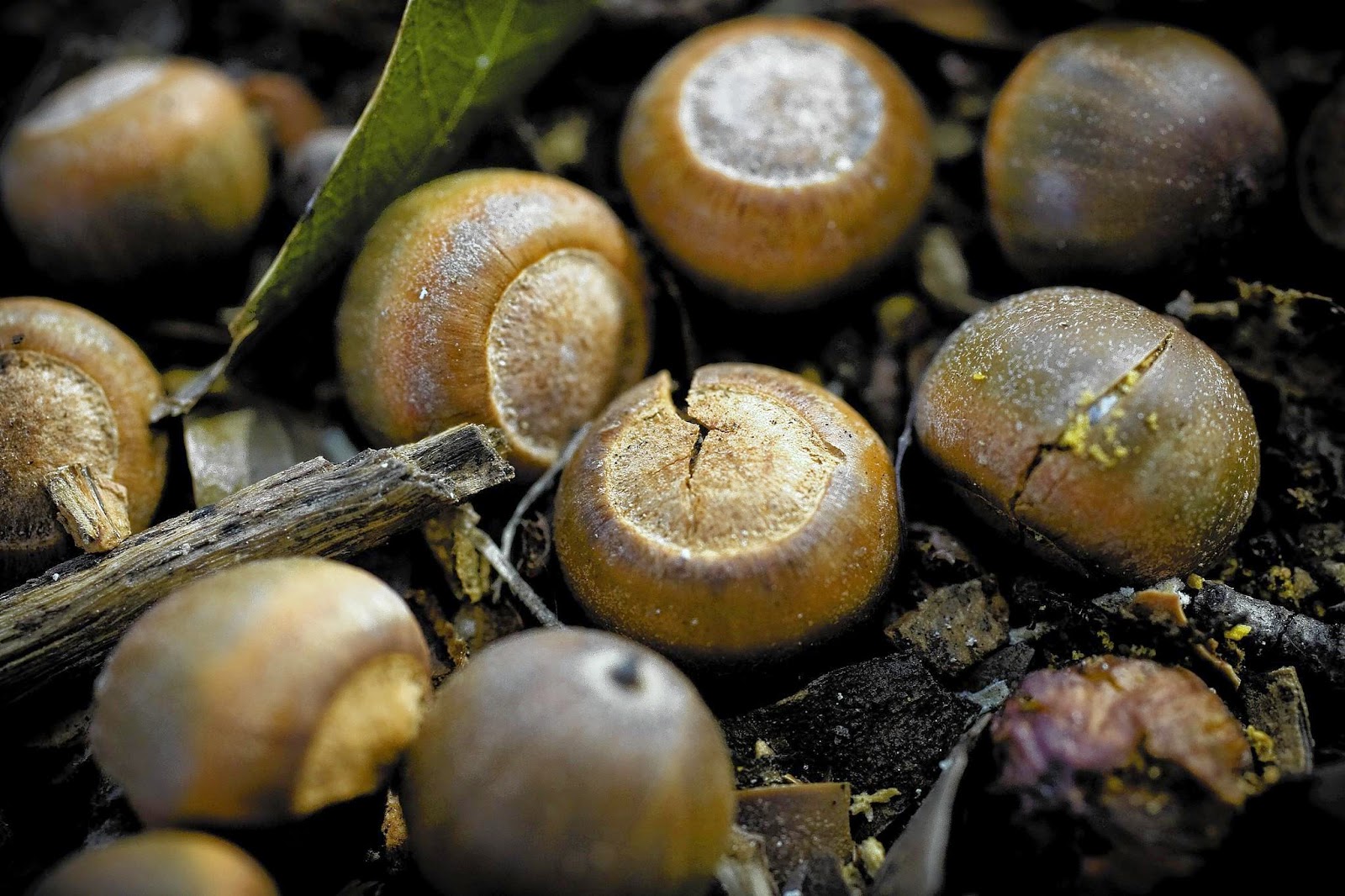
But like that acorn on the banner that Clyde has created for us, until something falls and dies, nothing will ever be more than what it is.  Until the seed falls to the earth and dies, all of the potential it holds for bold new life will be wasted.  The only way the acorn can realize its dream of new life as an oak tree is to die to its old life as an acorn.

Can we do that?  Can we let go of what needs to die in us, so that new life may flourish?

Today is not about triumph but thanks be to God, Easter is about hope.

Hope that even in godawful darkness, we will never again have to live without the possibility of light.

Hope that when we are walking in the valley of every thing we fear about life and about death, we can gulp and say, yep.  I can do this.  I can stare into the depths of an empty tomb on a cold morning in April and trust it means life.  I can trust enough to get up, turn away from that empty place, and go see what the living Christ is up to.

Wanna come with me? 

It’s Easter.  Resurrection is loose in the world.  Let us follow wherever it leads us.

Thanks be to God. Amen.


[1] Liddy Gerchman Barlow

Friday, April 3, 2015

Good Friday

Solemn Reproaches From The Cross

 Exodus by Marc Chagall

O my people, O my church,
what have I done to you,
or in what have I offended you?
Answer me.
I led you forth from the land of Egypt
and delivered you by the waters of baptism,
but you have prepared a cross for your Savior.
Holy, holy, holy God, holy almighty God, holy, holy almighty God, have mercy upon us.


I led you through the desert forty years,
and fed you with manna.
I brought you through tribulation and penitence,
and gave you my body, the bread of heaven,
but you have prepared a cross for your Savior.
Holy, holy, holy God, holy almighty God, holy, holy almighty God, have mercy upon us.

What more could I have done for you
that I have not done?
I planted you, my chosen and fairest vineyard,
I made you the branches of my vine;
but when I was thirsty, you gave me vinegar to drink
and pierced with a spear the side of your Savior,
and you have prepared a cross for your Savior.
Holy, holy, holy God, holy almighty God, holy, holy almighty God, have mercy upon us.

I went before you in a pillar of cloud,
and you have led me to the judgment hall of Pilate.
I scourged your enemies and brought you to a land of freedom,
but you have scourged, mocked, and beaten me.
I gave you the water of salvation from the rock,
but you have given me gall and left me to thirst,
and you have prepared a cross for your Savior.
Holy, holy, holy God, holy almighty God, holy, holy almighty God, have mercy upon us.


I gave you a royal scepter,
and bestowed the keys of the kingdom,
but you have given me a crown of thorns.
I raised you on high with great power,
but you have prepared a cross for your Savior.
Holy, holy, holy God, holy almighty God, holy, holy almighty God, have mercy upon us.


My peace I gave, which the world cannot give,
and washed your feet as a sign of my love,
but you draw the sword to strike in my name
and seek high places in my kingdom.
I offered you my body and blood,
but you scatter and deny and abandon me,
and you have prepared a cross for your Savior.
Holy, holy, holy God, holy almighty God, holy, holy almighty God, have mercy upon us.


I sent the Spirit of truth to guide you,
and you close your hearts to the Counselor.
I pray that all may be one in the Father and me,
but you continue to quarrel and divide.
I call you to go and bring forth fruit,
but you cast lots for my clothing,
and you have prepared a cross for your Savior.
Holy, holy, holy God, holy almighty God, holy, holy almighty God, have mercy upon us.


I grafted you into the tree of my chosen Israel,
and you turned on them with persecution and mass murder.
I made you joint heirs with them of my covenants,
but you made them scapegoats for your own guilt,
and you have prepared a cross for your Savior.
Holy, holy, holy God, holy almighty God, holy, holy almighty God, have mercy upon us.


I came to you as the least of your brothers and sisters;
I was hungry and you gave me no food,
I was thirsty and you gave me no drink,
I was a stranger and you did not welcome me,
naked and you did not clothe me,
sick and in prison and you did not visit me,
and you have prepared a cross for your Savior.
Holy, holy, holy God, holy almighty God, holy, holy almighty God, have mercy upon us.


Sunday, March 29, 2015

Palm/Passion Sunday -- March 29, 2015

Divine Politics


https://soundcloud.com/emsworthup/march-29-2015-11-24-18-am

NOTE: Sermons are aural events; they are meant to be heard, not read. The text below -- which was not delivered exactly as written -- may include errors not limited to spelling, grammar and punctuation of which the listener might be unaware and with which the preacher is unconcerned.

The sermon on Palm Sunday was cut short by a medical emergency involving one of our members attending worship.  She was taken by ambulance to a local hospital.  We pray for her wholeness and healing, and are thankful for the members of our congregation who tenderly cared for her while waiting for medical help. 

Philippians 2:1-11

If then there is any encouragement in Christ, any consolation from love, any sharing in the Spirit, any compassion and sympathy, make my joy complete: be of the same mind, having the same love, being in full accord and of one mind. Do nothing from selfish ambition or conceit, but in humility regard others as better than yourselves. Let each of you look not to your own interests, but to the interests of others.

Let the same mind be in you that was in Christ Jesus, who, though he was in the form of God, did not regard equality with God as something to be exploited, but emptied himself, taking the form of a slave, being born in human likeness. And being found in human form, he humbled himself and became obedient to the point of death— even death on a cross. Therefore God also highly exalted him and gave him the name that is above every name, so that at the name of Jesus every knee should bend, in heaven and on earth and under the earth, and every tongue should confess that Jesus Christ is Lord, to the glory of God the Father.


A couple of years ago, I read a book called, American Savior, A Novel of Divine Politics.  At the beginning of the book, we meet Russ Thomas, a TV reporter, who is sent to cover a story of a young child who had fallen three stories, seemed dead, and came back to life when a stranger came up and touched him.  Some people were calling it a miracle, but Russ remained skeptical. Later, he's sent to a hospital where the same stranger has visited a young girl and seemingly cured her of a chronic illness.

The stranger becomes known as "The Good Visitor," and he turns out to be Jesus Christ. One day, Jesus calls Russ and tells him that he's running for President of the United States and would like for Russ to work on his campaign. Russ is not convinced at first, but finally agrees when Jesus visits Russ's girlfriend in a dream.

Jesus assembles a ragtag campaign team and heads out on the road as the candidate for The Divinity Party.  Jesus runs an unusual campaign - he doesn't criticize his opponents and he's always available to take questions.  I know – very unusual, right?  Jesus' chances of being elected seem slim as he faces skepticism from both ends of the political spectrum over his platform of kindness and goodness and the fact that he names his mother as his running mate.

At the end of the book, a woman in a crowd screams out her accusation that the candidate is not really Jesus.

"I might not be," he said slowly. "I might not be. But my question to you is this: would you know him if he came into your midst? If he came into your midst and did not look the way you expected him to look, and did not speak as you expected him to speak, would you know him?"

Maybe I am the only one who thinks like this, but the gospel stories of Jesus’ entrance into Jerusalem at the beginning of Holy week, seem as inadvertently satirical as this intentionally satirical book I’ve just described.  Unlike a polished politician who spends his or her early career amassing money and connections, and crafting a carefully cultivated public image, Jesus has spent most of the gospel narrative up until today recklessly abandoning his home, family, reputation, and safety.  Instead of ingratiating himself to the powers that be, Jesus has become a scandalous figure in the eyes of the temple authorities. and a terrible pest to the state.  Everyone else who meets Jesus wants to claim him as being on the side of their particular cause, their particular tradition, their particular theological view.

But Jesus refuses to be boxed in by human expectations.  Jesus goes through life on the side of nobody but God, which often puts him at odds with pretty much everyone else except those that nobody else will claim and whom God seems to always side with -- marginalized, sick, despised, and forgotten people.  Those are the kind of folks who will throw their lot in with Jesus because they have nothing left to lose. 

But on this Sunday, Palm Sunday, it seems as if Jesus has finally woken up and gotten with the program.  It’s high political drama, Jesus entering into Jerusalem, greeted by the crowds of people who want him to be their king, to save them from Rome, and be their shiny new Messiah.

But Jesus will have none of it.  He soon turns his back on the shouts of “Hosanna!!” It’s like he didn’t even hear the roar of the crowd.  And once they sense that this Jesus is not the candidate they’d been hoping for, the crowd becomes disillusioned.  Pretty soon, their enchantment with Jesus will morph into anger, which will finally boil over into shouts of “Crucify him!”

Nothing will change Jesus’ course.  Not the fear of disappointing his public.  Not the heartbreak of leaving his friends.  None of that can stop him.  He keeps walking and walking as everything keeps getting darker and darker, but Jesus doesn’t stop walking until the very end.  

In this text from Philippians, Paul tells us why Jesus ignored every opportunity to save himself and take over the whole human operation.  Because Jesus had the mind of God, Jesus had to give himself away completely, to give himself completely over to love.  Jesus had to turn his back on the power that could have so easily been his by getting down on his hands and knees to serve people who couldn’t do a thing for him in return and abandoned him in the end.  Jesus ends up dead because that’s what usually happens when power meets a threat it cannot master or tame.  There’s nothing more threatening to power than genuine, self-giving, self-sacrificing love that is the mind, the very essence, of God. 

Jesus resisted any attempt to make his message or ministry the private domain of a particular culture, government, or group.  By being on God’s side, Jesus was on everyone’s side.  As this became clear, the crowds begin to melt away. 

Holy Week always makes me feel a little uncomfortable because I know that I do not have the mind of Jesus.  Holy Week makes me feel uncomfortable because I know I would have a difficult time resisting the impulse to grab the power that Jesus had at his fingertips and strike back against the tyranny of the Roman Empire.   Holy Week makes me uncomfortable because I know I would be one of those people who shouted Hosanna on Sunday, and leave Jesus on his own in a garden a couple of days because this suffering servant has let me down and it’s becoming much too scary and dangerous to follow him.  Any fool could see what was going to happen to Jesus.   Holy Week always makes me uncomfortable because I know  deep down that I am an amateur at love, that I will fall asleep when the going gets tough, that I will not answer his call when it really matters, and I will abandon him if it means I have to give up my own assurance of being right about everything.

Holy Week makes me uncomfortable because it reminds me that walking with Jesus all the way to the cross means I must not only have the mind of God, but also be of the same mind of others who seek to walk the same road.  I can’t claim Jesus as the one who supports my views, my opinions, and my preferences as if that’s all that interests Jesus.  I have to think about other people first, and care more about them than I do for myself.   I have to shed my own little ambitions and my own little prejudices.  And once I do that, what will be left over for me?

This discomfort came into sharp relief for me this week when I was sitting with a group of pastor colleagues talking about a vote on same gender marriage coming up in May at a meeting  of Pittsburgh Presbytery.  Although it has already received support from enough presbyteries to change the wording about marriage in our Book of Order, the presbyteries that have not voted on it yet are still required to do so.  I have sat through pretty much every single meeting of the presbytery over the past decade.  I have been to three General Assemblies where this topic has been front and center.  I have heard pretty much every endless and heated public debate, and countless private ones, on the matters related to homosexuality and the PCUSA.  By my count, I have suffered at least 32 migraine headaches as a result of listening to the arguments.  As I am sure many of you do, I have a very specific point of view on the topic.  But when it comes to how we talk with one another in these gatherings, I find those debates nothing short of soul-sucking awful, no matter the result.

As I sat with my colleagues this week, I wondered out loud:  Can we do this differently this time?  Instead of talking past each other on the floor of presbytery, could we instead seek to honor one another?  Could we look not to our own interests, but to the interests of someone else?  Could we intentionally reach out in humility and maybe love to those with whom we disagree?  Could the headline in the Post-Gazette on the Friday morning for once not be, “Pittsburgh Presbytery approves or disapproves gay marriage after a bitter battle,” but “In a Surprising Turn of Events, Pittsburgh Presbyterians Love One Another.”  Or, “In Surprising Turn of Events, Pittsburgh Presbyterians Unite To Devote Their Energy to Mission and Ministry Instead of Dividing?”

Wouldn’t that be the craziest thing ever?  I’m pretty sure my colleagues wondered what I’d been drinking.

But this is why Jesus’ divine politics made people so mad during Holy Week.  After the parade ends, nobody can claim him as their own personal Messiah.  Jesus openly refuses to side with anyone.  Not with the religious leaders who hear his claims and see his actions as intentional blasphemy.  Not with the disciples who can clearly see how badly this project is going to end and will deny that they ever knew the man in order to save their own skin.  Not with Pilate who despite endless contortions to try to keep Jesus off the cross cannot make a deal with this guy.  Not the crowds who had started out screaming for Roman blood and are now shrieking for the execution of this faker who led them on with his healing and feeding miracles.  Where’s the bread now?  Why won’t Jesus save us, all of us, the way we want to be saved? 

If anyone could claim to know the mind of God, it was Jesus.  And what we see in Holy Week is a God who is driven not by power or by might, but by love and mercy so deep, so wide, so broad that it cannot be contained by one side or another, but is poured out for the sake of everyone.  And that makes Holy Week uncomfortable for us.  It should make us uncomfortable and if it doesn’t, maybe we’re doing it wrong.

I’ve spoken to you before about a great pastor named Will Campbell.  Will was born in the very poor deep south of Mississippi.  He was ordained at a local Baptist church when he was seventeen and eventually played a central role as white activist on behalf of African Americans, working with most of the civil rights leaders of the time.  For example, in 1957, Campbell was one of four people who escorted the nine black students who integrated Little Rock’s Central High School, and he was the only white person invited to attend the founding of the Southern Christian Leadership conference by Rev. Dr. Martin Luther King, Jr.

But as the years went on, Campbell began to feel uneasy about his work.  He realized that he was beginning to hate those redneck bigots who hated.  Campbell discovered how easy it is to play favorites and to oppress the oppressors.  He realized that after 20 years in ministry, he had become little more than a social activist, which is different from being a follower of Jesus.  He had created a God in his own image.

What happened was that he realized Jesus died for bigots as well as the people whose civil rights Campbell had spent his life fighting for.  Campbell said, “Anyone who is not as concerned with the moral soul of the dispossessor as well as the dispossessed is being less than Christian.”

Acting upon this conviction, Campbell reached out.  On the night before the Grand Dragon of the North Carolina Ku Klux Klan was shipped off to Federal prison, Campbell celebrated communion with him.  Later, he ministered to James Earl Ray who had murdered his friend, Martin Luther King, Jr.  When people asked Will Campbell if he really expected to save the souls of such men, Campbell said he thought it would be presumptuous to think so.  He said, “They might, however, save mine.” 

Campbell made civil rights activists uncomfortable because did things like becoming friends with bigots.  Campbell made bigots uncomfortable because he stood with civil rights activists.  But in the end, following Jesus meant more than comfort to Campbell.

The bad news of the Gospel on Palm Sunday is that God will never be God on our terms. God will never be the answer to our own, self-defined questions. God comes to us in Christ and demands that we let go of our questions and instead answer God’s question.  And God’s question to us is simply this: “Who do you say that I Am?” Who is this man who lives life wholly for others, who makes himself nothing, who does not regard equality with God as something to be held onto, who empties himself, who though he was rich for our sakes was made poor, who having loved those who were his own, loved them to the end even when they turned their backs on him.—who do you say this person is? Who is this one who loved infinitely?

The answer the church gives is that this man who lived wholly for others is God incarnate.

But for us to say yes to God, we must submit ourselves to the severe mercy of having our hopes dashed. This is the lesson of Palm Sunday: that only when we have our hopes dashed are we set free to receive the saving grace we do not expect.  And if its costly grace and not the kind that comes cheap, it will most certainly make us uncomfortable.

Palm Sunday is a reminder to us that God came, not to fulfill our hopes, but to bring them to nothing, and that by so dashing our hopes, we will receive more than we could ever ask or think.

In this week’s issue of Christian Century, John Buchanan writes: “We become fools for Christ because Jesus was still loving and forgiving even as men were driving nails through his wrists and ankles.  Because of Easter, we dare to believe that the resurrection drama points to God’s ultimate power and authority.  Death did not defeat Jesus.  The power of empire, human hatred, cruelty, and bigotry did not prevail on that dark Friday because three days later, there was Easter.”

Thanks be to God.  Amen